
Our Approach
What’s the loaf of bread you want to take out of the oven at the end of this process?
That’s the question we’ll ask you as we begin each project. We’ll help you crystallize a core objective and pinpoint what you want to know. That clarity of focus guides us at every step: the approaches we take to reach your audience, the questions we ask, and the conclusions we reach.
Providing a high-definition picture of your audience
Our surveys are thoughtfully designed and methodically conducted. We interview in multiple languages, through multiple outreach modes, and employ large sample sizes. The result is a picture of your audience that you can count on, and that stands up to scrutiny.
Not just the what, but the why
Well-designed research invites your audience to guide us to the answers. We know how to make the quantitative and qualitative work together, so you understand not just the what, but the why. Our focus groups and in-depth interviews are welcoming and affirmative for respondents. That technique works. We will get you answers no one else will. That’s a bold claim, but we’ll back it up.
Finding the story in the data
Anyone can generate a lot of numbers. We will help you find the narrative within the sea of data. We will point you toward the most important findings, the ones that are actionable and have an impact.
When has research been this fun?
We love what we do, and we know that our work contributes to moving your mission forward. You will feel that enthusiasm when you work with us. Research has never been so fun.
Chesapeake Behavior Change
Baywide Stewardship Survey and Web Portal
Our work for the Chesapeake Bay Program, exploring behaviors and intentions of the watershed’s 19 million residents through a deep dataset and a public-facing web portal Chesapeake Behavior Change, is pioneering and nationally recognized. Our 2023 dataset of over 6,500 interviews is accessible through a dynamic search engine on this public-facing site.
The Recycling Partnership
Recycling Confidence Index
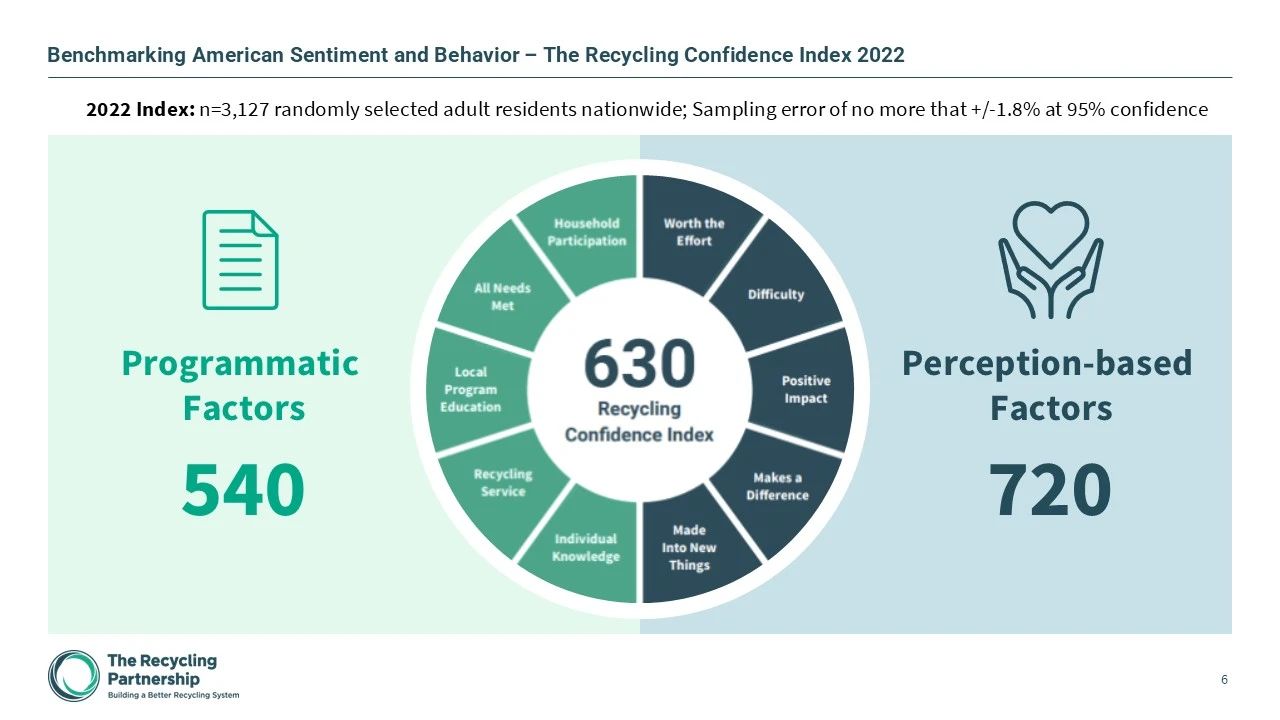
OpinionWorks has authored The Recycling Partnership’s national Recycling Confidence Index (2022), and is soon to release the updated 2026 Index. The Index examines the links between how confident people feel about recycling, and their participation in recycling at home. Building on this national work, we have conducted numerous local studies in conjunction with the Partnership helping local communities improve recycling service delivery, including in Northwest Arkansas (November 2025); Syracuse, New York (December 2025); the Twin Cities of Minneapolis-St, Paul (January 2026); McKinney, Texas (February 2026) and Sacramento, California (March 2026).
Addressing the Risk
Understanding and Addressing Fish Consumption Risks
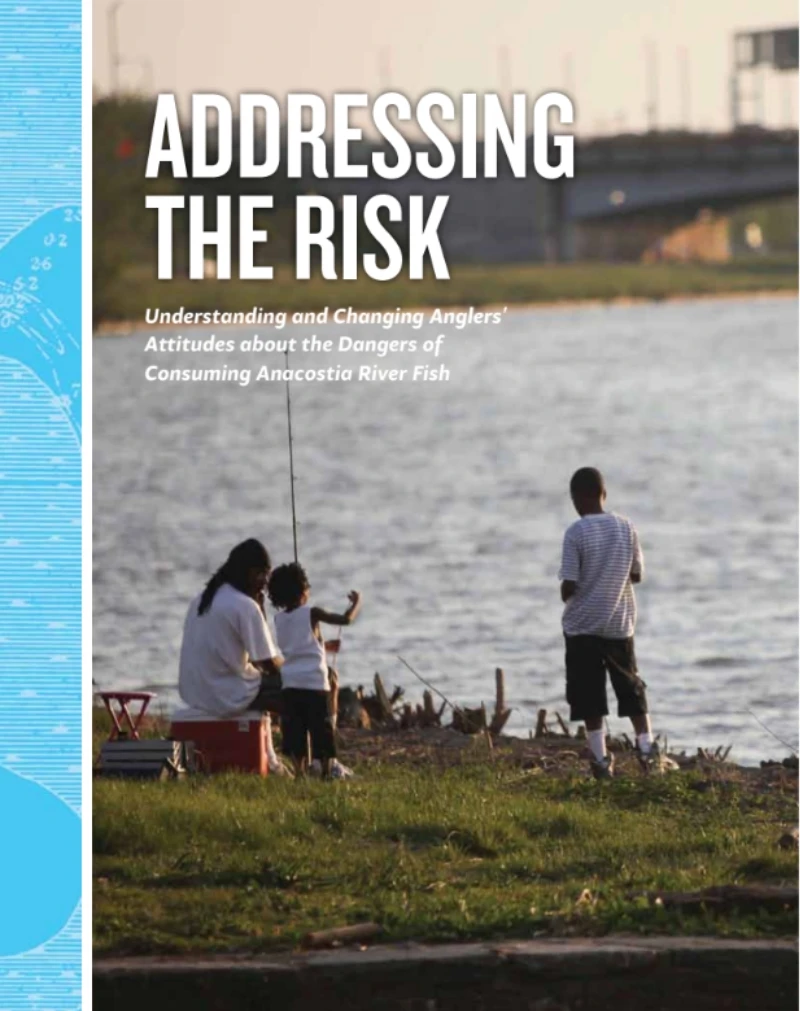
Our study of Anacostia River anglers shows the startling extent of fish consumption and sharing from those polluted waters. Through focus groups and riverbank interviews, we identified anglers’ level of awareness of the health risks and the best techniques to communicate with this multi-lingual audience to lessen consumption. This report identifies a complex, interlocking set of factors that must be addressed.

Our EPA-funded study in the New York and Connecticut portions of the Long Island Sound watershed established a benchmark of public perceptions about the Sound and provided a behavior change tool for public outreach practitioners throughout the watershed. We are currently engaged with the Partnership to help them develop a new public-facing web portal to make the data readily accessible to practitioners.

The City of Dayton, Ohio wanted a comprehensive survey to assess resident satisfaction with City services, an assessment of quality of life indicators, and an evaluation of the public’s priorities for future service delivery. We developed a friendly questionnaire, distributed by mail to 9,000 households and made available online. A healthy response rate due to strong community relations delivered 1,200 to 1,500 surveys per annual installment. Results were made available to the public through a web reporting tool Home | Dayton, OH Resident Survey 2021.

Marin Humane commissioned a community study to better understand the needs and perceptions of residents across Marin County, California, along with the organization’s donors, volunteers, and pet adopters. As both a nonprofit and the County government’s contracted animal control provider, the study had both a public and private purpose, providing Marin Humane with strategic communications recommendations and program innovations sought by its constituents.

Since 2012, we have conducted a 2,000-interview bilingual health study in Howard County, Maryland for a coalition of partners led by the Horizon Foundation and including Johns Hopkins Medicine, measuring health risks and behaviors, with a survey instrument and methodology modeled after the Centers for Disease Control’s Behavioral Risk Factor Surveillance System survey. The study provides important guidance for public health professionals on the health needs in the community.

A series of focus groups for the Maryland Citizens’ Health Initiative and the Maryland Health Benefit Exchange among unenrolled eligible adults to understand barriers to enrollment under the Affordable Care Act and ways the Exchange and non-profit advocates could reach out more effectively.

Perceptions survey of the general public in greater Salt Lake City, as well as prospective students, conducted for Weber State University every four years dating back to 2009, to understand impressions of the University, attitudes about higher education and intentions to pursue additional education, and recall of University communications.

The Metropolitan Washington Council of Governments, together with its counterpart the Baltimore Metropolitan Council, have formed a collaborative entity called Clean Air Partners to reach and engage the public in activities that will help improve the region’s air quality. This effort relies on a representative public perceptions study, which we developed and benchmarked in 2015 and continue to track every three years. The study examines perceptions of air quality, the public’s willingness to take specific actions to help improve the air, and their feelings of who is responsible for air quality problems, all as an aid to policymakers and public outreach practitioners.

Focus groups among Medicaid-eligible new and expecting mothers in six communities across West Virginia, including some very rural communities in the south and southwestern parts of the state. This work, conducted for the West Virginia Department of Health and Human Resources, was aimed at improving the way DHHR communicates and positions its Right From The Start program, which provides free services for low-income mothers to help them have a healthy pregnancy and first year, but was not reaching a large share of eligible mothers.

Every five years, the states are mandated by the US Department of the Interior to conduct a recreational demand survey to determine the best use of funds for development of new parks and recreational offerings. In 2024, we developed and conducted the “SCORP” survey for the New York Office of Parks and Historic Preservation. This year-long process involved facilitating a staff and consultant team to meet priorities, including ensuring that traditionally underserved audiences were adequately represented in the survey sample. The work culminated in the fielding of a 10,000-interview statewide survey, accessing the Ipsos online survey panel.

An innovative project at the intersection of religious faith and climate change, conducted for Lutheran World Relief, an international relief and development NGO. Through focus groups in Minneapolis and Fort Wayne, Indiana, among LWR constituents, we examined the language and attitudes that animate discussion on this topic across the spectrum of science and belief, producing work that was later presented at the conference of the American Evaluation Association.


The Chesapeake Bay Trust was created in 1985 by the Maryland General Assembly to engage the public in the care and restoration of the Bay’s waters. A key part of its funding comes from the sale of the Chesapeake Bay license plate. When it came time for a plate redesign, we developed a thorough process of quantitative and focus group testing among potential Bay Plate buyers, narrowing and refining from about three dozen candidate designs. The outcome was a doubling of Bay Plate sales in the first month the new design was unveiled, a pace that has been maintained, generating significant new revenue for Bay restoration.

OpinionWorks conducted comprehensive audience research among PLU’s alumni and donors to understand the level of connection those constituents felt with the University, and what would make them engage more closely with PLU. The research evaluated constituents’ perceptions of the University, impressions of changes and new directions at PLU, and barriers that could be in the way of a closer connection. Ultimately, our mission was not just to examine the relationship, but to recommend ways to bring constituents into more meaningful, closer engagement with PLU. This work consisted of a survey of 2,510 constituents, distributed by email, traditional mail, and telephone, plus ten focus groups across the country, resulting in significant new directions for constituent communications and alumni engagement programs.

For a coalition of organizations led by the National Wildlife Federation, we polled 3,070 registered voters, reflecting the makeup of the electorate across the 14-state Ohio River Basin, and conducted 10 focus groups, to measure attitudes about the Ohio River and its tributaries. Our research found widespread support across party lines for federal action to restore and protect the waters of the Ohio River Basin. The support is strong and motivated by serious worry about environmental threats, which many voters feel imperil their family’s health. There is urgency behind these concerns and impatience for action by policymakers, which translates into very strong voter support for the restoration plan. Our work led to messaging recommendations for a broad-based coalition of advocates.

Through surveys conducted every four years beginning in 2013, the Maryland Food Bank has sought to understand the public’s perceptions of hunger, their level of experience and personal contact with the problem, and their willingness and motivations to be engaged. The survey measures support for public policy proposals, the impact of messages and ideas about hunger, and the standing of the Maryland Food Bank itself. The survey painted a detailed picture of Marylanders’ relationship with the problem of hunger, identifying a high level of concern and impact. The survey also indicated that residents want their policymakers to rise to the task of addressing the widespread problem of hunger in Maryland. These findings have helped change the conversation about hunger among journalists and policymakers.